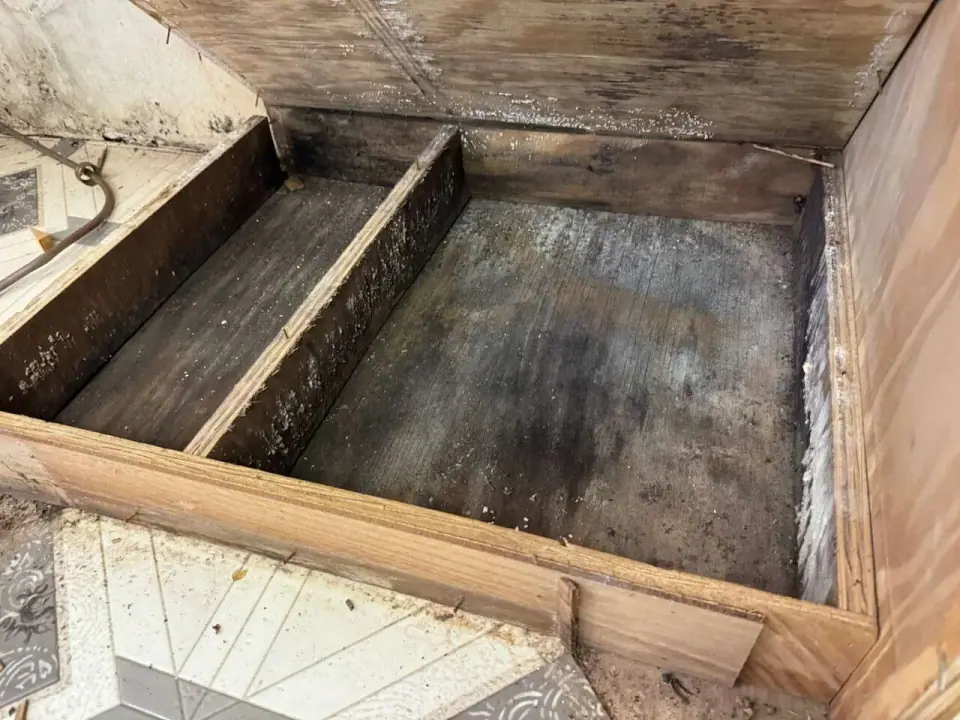
The homeowner had no idea it was this bad. The dishwasher had been leaking for a long time — not a flood, not a burst hose, just a slow drip working its way under the cabinets. By the time they noticed mold creeping onto the cabinets, the damage underneath had been building for months.
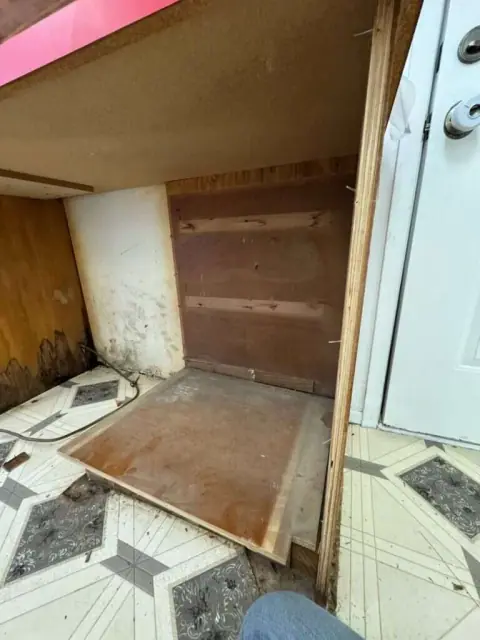
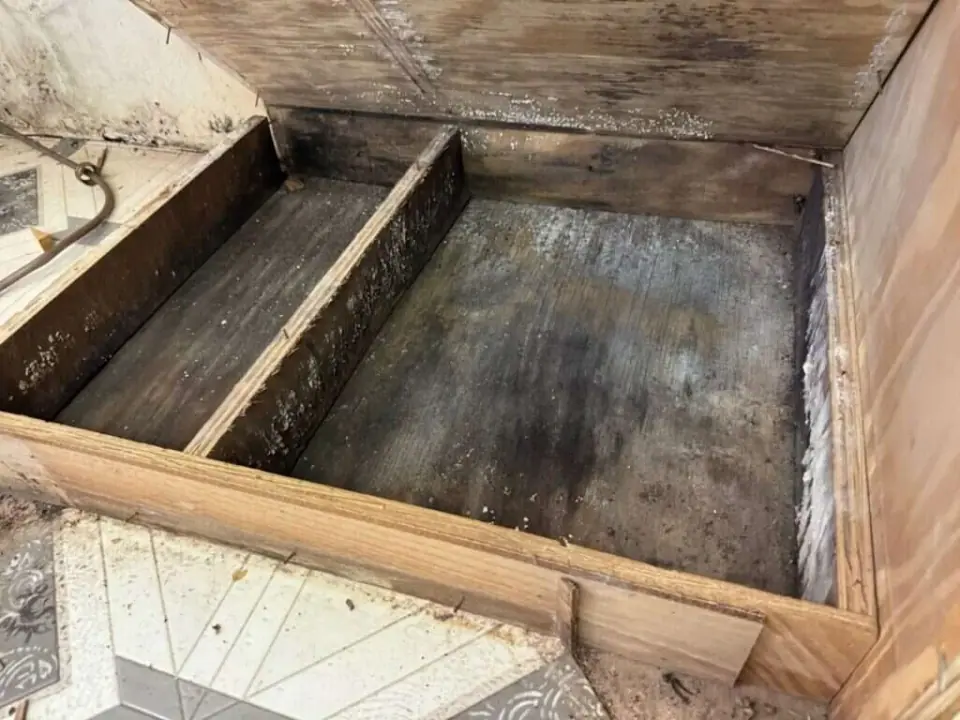
When our team pulled the bottom board out from under the cabinet run, the whole story was right there: blackened wood, mold spread across the toe kick framing, and moisture staining reaching up the cabinet backs and wall. From the kitchen floor, everything had looked normal.
You never know what is hiding in the areas you cannot see. This job in East Texas is a perfect example of two things every homeowner should understand: how slow leaks do their damage quietly, and why the wrong insurance coverage can leave you paying for all of it yourself.
What We Found When We Pulled the Bottom Board
Kitchen cabinets sit on a wooden base, and the flat panel at the bottom of the cabinet hides the hollow space underneath. Water from a slow dishwasher leak does not stay by the dishwasher. It follows the floor under the cabinets, soaks into the framing, and sits in that dark, enclosed space where it cannot dry out.
That is exactly what happened here. The toe kick cavity under these cabinets stayed damp for months. Mold does not need much — moisture, still air, and a wood surface to feed on. Behind that bottom board, it had all three.
The homeowner only found out because the mold finally reached the cabinets where it could be seen. Everything in the photos below was hidden until we opened it up.
How a Dishwasher Leak Stays Hidden for Months
Dishwasher leaks are among the sneakiest sources of water damage we see, because the appliance sits recessed under the countertop and most of the plumbing is out of sight. A worn door gasket, a loose supply line fitting, or a slow drip at the drain hose can release a small amount of water with every cycle.
A few tablespoons per wash does not leave a puddle you would notice. It wicks under the dishwasher, under the adjacent cabinets, and into the subfloor. In East Texas humidity, that trapped moisture has very little chance to dry on its own.
Warning signs worth checking for in your own kitchen:
- A musty smell near the sink or dishwasher that does not go away
- Cabinet toe kicks that look swollen, stained, or warped
- Flooring that feels soft, lifts, or discolors near the dishwasher
- Mold spots appearing along cabinet bases or baseboards
- A dishwasher door seal that shows drips or mineral tracks after a cycle
If any of these sound familiar, do not wait. The damage you can see is almost never the full extent of it.
The Insurance Problem: Sudden Leaks vs. Slow Leaks
Here is the part that surprises most homeowners. A standard homeowners policy is generally written to cover water damage that is sudden and accidental — a burst pipe, a supply line that lets go, a water heater that fails. What many policies exclude is damage caused by continuous or repeated seepage and leakage over a period of weeks, months, or years.
A dishwasher that dripped quietly for months falls squarely into that second category. When the adjuster determines the leak was long-term, a claim on a standard policy can be reduced or denied — even though the homeowner never knew the leak existed.
We wrote more about how this works in our guide to homeowners insurance and water damage in Texas.
Why Leakage and Seepage Coverage Is Worth Asking About
Many insurance carriers offer an optional endorsement — often called leakage and seepage coverage or hidden water damage coverage — that adds protection for exactly this situation: slow, hidden leaks you could not reasonably have known about.
This job is a perfect example of why that endorsement matters. The damage under these cabinets did not come from a dramatic failure. It came from a drip. Without seepage coverage, the cost of tearing out cabinets, treating mold, drying the structure, and rebuilding can land entirely on the homeowner.
Every policy is different, and we are restoration professionals, not insurance agents. Our advice is simple: call your agent, ask whether your policy covers long-term hidden leaks, and ask what adding leakage and seepage coverage would cost. It is usually a small line item compared to what a hidden leak can do.
Found Mold Under or Behind Your Cabinets?
If you have spotted mold on your cabinets, noticed a musty smell in the kitchen, or suspect an appliance has been leaking, the safest move is a professional inspection. We use moisture meters and thermal imaging to find how far the water traveled — without guesswork and without unnecessary demolition.
Wet To Dry Restoration provides 24/7 water damage restoration and mold remediation in Winnsboro, Sulphur Springs, Pickton, Greenville, Cumby, and surrounding East Texas communities. Call (903) 869-8838 and we will tell you exactly what is hiding under there — and what it will take to make it right.