CONTACT US FOR 24/7 SWIFT AND RELIABLE ASSISTANCE
- 1136 COUNTY ROAD 2381 S WINNSBORO, TX 75494
-
MON-FRI: 9AM-5PM
SAT-SUN: CLOSED
24-HOUR EMERGENCY
CONTACT US FOR 24/7 SWIFT AND RELIABLE ASSISTANCE
Professional mold remediation follows the same basic order on almost every job: inspect the home and find the moisture source, contain the work area, filter the air, remove the materials that cannot be cleaned, clean what stays, dry the structure, verify the result, and rebuild. A small, contained job can be finished in a day or two. Most household projects take several days to about a week, and jobs that need reconstruction take longer.
That is the short answer. The rest of this guide explains what happens at each step, what you will see in your home while the work is going on, and the questions East Texas homeowners ask most often before a job starts.
Mold spores are a normal part of outdoor and indoor air, so no company can remove every spore from a house. Be cautious of anyone who promises a completely mold-free home. Remediation means something more specific: removing the mold growth and the contaminated materials, cleaning the area back to a normal condition, and correcting the moisture problem that allowed the growth in the first place. If the moisture is not fixed, the mold comes back, no matter how well the area was cleaned.
That last part matters in East Texas. Long humid summers, AC condensate leaks, slow plumbing leaks, and storm water all give mold what it needs: moisture, a food source such as drywall paper or wood, and time. If you are still working out whether you have a problem at all, start with our guides on how to spot mold in your home and how fast black mold grows.
The U.S. Environmental Protection Agency says that if the moldy area is less than about 10 square feet, roughly a 3 foot by 3 foot patch, most homeowners can handle the cleanup themselves. The EPA guide Mold Cleanup in Your Home explains how to do that safely.
It is time to call a professional when:
Texas also regulates mold work. The Texas Department of Licensing and Regulation licenses mold assessors and mold remediation contractors, and larger projects generally have to follow the state mold rules. Ask any company you are considering about its licensing and insurance, and confirm the current requirements with TDLR.
Every job starts with finding out how far the problem goes and why it started. A technician inspects the visible growth, then uses moisture meters and thermal imaging to find wet materials that cannot be seen, such as the back side of drywall, the subfloor, or insulation. Air or surface samples may be collected for lab analysis when the situation calls for it. The result is a written scope: which areas are affected, what has to come out, what can be cleaned, and where the water is coming from.
Disturbing mold releases spores, so the work area is sealed off before anything is removed. Expect plastic sheeting from floor to ceiling, a zippered entry, and supply and return vents inside the work area covered so the HVAC system does not carry spores through the house. The contained area is kept under negative air pressure, which means air flows into the work zone and not out of it.
HEPA-filtered air scrubbers run for the entire job. They capture airborne spores and dust inside the containment and are usually the noisiest part of the process. They stay on overnight.
Porous materials with mold growth usually cannot be cleaned well enough to keep. That often includes drywall, insulation, carpet pad, ceiling tiles, and sometimes carpet or cabinet panels. These materials are cut out, bagged, and sealed inside the containment before they are carried through the rest of the home.
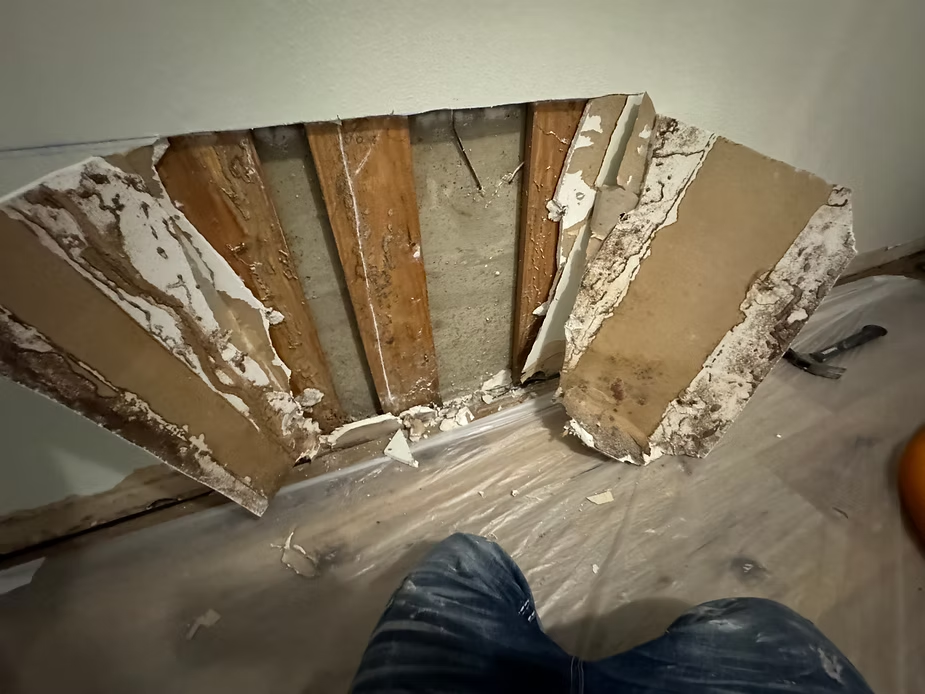
Framing, subfloor, concrete, and other structural materials are cleaned in place. This typically means HEPA vacuuming, damp wiping, and abrasive cleaning such as wire brushing or sanding on wood framing, followed by another round of HEPA vacuuming. Spraying or fogging a room is not remediation on its own. Dead mold can still trigger allergic reactions, so the growth has to be physically removed, not just treated.
The structure is dried with dehumidifiers and air movers until moisture readings return to a normal range for that material. The leak, drainage issue, or humidity problem that started the growth has to be corrected at this stage. When the cause is a plumbing failure or storm water, mold work and water damage restoration often happen on the same job.
Before the containment comes down, the work is checked. Post-remediation verification normally includes a visual inspection, moisture readings, and follow-up sampling where it is called for. Once the area passes, reconstruction can begin: new insulation, drywall, texture, paint, flooring, and trim.
The honest answer is that it depends on what the inspection finds, but these are the things that set the schedule:
As a general guide, a small contained area may take one to two days of active work. A typical household project runs several days to about a week. Large or hidden problems, or jobs with significant rebuilding, can take longer. A written scope after the inspection should give you a realistic timeline for your home.
Often, yes. When the work is limited to one area and that area is properly contained, many families stay home and simply stay out of the work zone. It may make more sense to stay elsewhere if the work affects your only bathroom or the kitchen, if the HVAC system has to be shut down in hot weather, if large areas of the home are involved, or if someone in the household is sensitive to mold. Health questions belong with your doctor. Our article on whether mold can make you sick covers common symptoms and when to get checked.
Coverage depends on your policy and on what caused the mold. In general, mold that results from a sudden, covered water loss is treated differently from mold caused by a long-term leak, humidity, or deferred maintenance, and many policies limit or exclude mold. Read your policy, ask your agent how mold is handled, and report water damage promptly. Wet To Dry Restoration provides documentation of the damage and the work, which can help when you talk to your insurance company. We also wrote a general guide to homeowners insurance and water damage in Texas.
If you left during the work, you can usually return once the area has passed its final check and the containment and equipment have been removed. If you stayed in the home, you only need to keep out of the contained area until then. Your contractor should tell you clearly when the space is ready.
Not if the moisture source was fixed. Mold returns when the leak, condensation, or humidity problem is still there. Keep indoor humidity under control, repair leaks quickly, and dry any new water damage within a day or two.
Not always. When growth is visible, the priority is finding the moisture and scoping the work. Sampling is most useful when mold is suspected but hidden, when you need documentation, or to help verify the result afterward. Our guide to what is involved in home mold testing explains the options.
Wet To Dry Restoration provides mold inspection, testing, and mold remediation across East Texas, including Winnsboro, Sulphur Springs, Pickton, Clearwater, Cumby, and the surrounding communities. If you see mold, smell a musty odor that will not go away, or have had a leak that was never fully dried, call (903) 869-8838 or request an inspection. We will tell you what we find, what it will take to fix it, and how long it should take.
