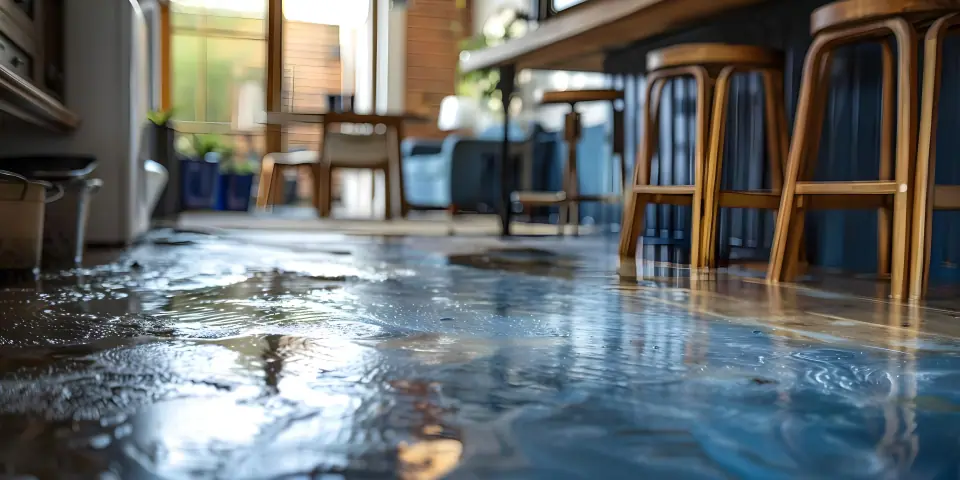
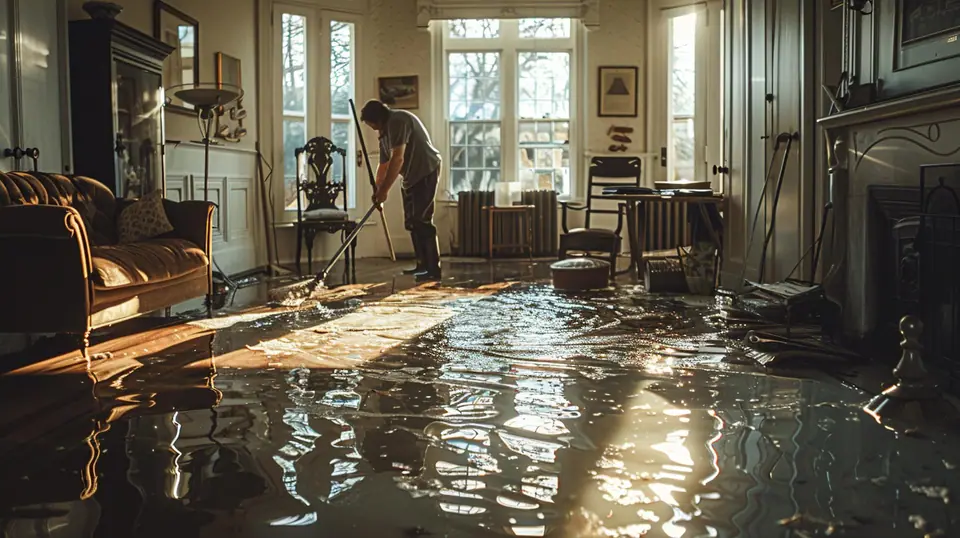
You can fix some water damage yourself: a small spill of clean water, found quickly, on surfaces you can reach and dry within a day or two. Once water has soaked into walls, subfloors or insulation, came from a dirty source, or has been sitting for more than a couple of days, do-it-yourself drying usually leaves moisture behind that you cannot see. That hidden moisture is what turns a small leak into a big repair.
The Short Answer: It Depends on Three Things
Before you grab towels and a fan, ask three questions.
- Where did the water come from? A burst supply line or an overflowing sink is usually clean water. Water from a toilet overflow, a washing machine or a dishwasher can carry contaminants. Sewage, floodwater and water that came in from outside are a different problem entirely.
- How far did it travel? Water on a tile floor that you mop up in ten minutes is one thing. Water that ran under baseboards, into a wall cavity or through the ceiling below is another.
- How long has it been wet? The U.S. Environmental Protection Agency says it is important to dry water-damaged areas and items within 24-48 hours to keep mold from growing. If you cannot get materials dry in that window, the job has outgrown a fan and a mop.
If the answers are clean water, a small area and caught right away, you can often handle it. If any answer points the other way, read on before you start.
Water Damage You Can Usually Handle Yourself
These situations are often manageable for a homeowner with a wet vacuum, towels and a few fans:
- A sink, tub or clean supply line overflow that you caught within minutes
- Water standing on sealed tile, vinyl or concrete that has not reached the walls
- A small drip under a sink that wet the cabinet floor but nothing beyond it
- A spill on a small area rug that you can lift and dry outdoors
The common thread is clean water that stayed on hard, non-porous surfaces and that you can see all of.
How to Dry a Small Clean Water Leak the Right Way
If your situation fits the list above, work in this order.
1. Stop the water and make the area safe
Shut off the supply valve under the fixture or the main water valve to the house. If water is near outlets, cords or appliances, turn off power to that area at the breaker, but only if you can reach the panel from a dry spot. If the panel is wet or you would have to walk through water to reach it, stay out and call an electrician or your utility.
2. Remove standing water fast
A wet vacuum pulls up far more water than towels. Get every bit of standing water you can, including what has run into corners and under appliance edges.
3. Move wet belongings out
Lift rugs, furniture and boxes out of the wet area. Put foil or plastic under furniture legs if you cannot move a piece, so stain and finish do not transfer to the floor.
4. Get air moving and pull moisture out of the air
Open cabinet doors, run fans across the wet surfaces, and run your air conditioning or a household dehumidifier to keep the humidity down. In East Texas, opening the windows on a humid day can add moisture instead of removing it.
5. Check what you cannot see
Feel baseboards and the bottom of nearby drywall. Look for swelling, bubbling paint or a soft spot. Press on the floor near the wet area. If anything feels damp, swollen or soft a day later, water got further than you thought.
When to Call a Professional
Call for help when any of these are true:
- Wet drywall or baseboards. Drywall wicks water upward and holds it inside the wall cavity, where fans cannot reach.
- Wet carpet and pad. The pad under the carpet holds water long after the top feels dry. Our guide on whether wet carpet, hardwood or laminate can be saved explains what usually can and cannot be dried in place.
- Water from above. A leak through a ceiling means wet insulation and framing you cannot get to.
- A dirty source. Toilet overflows, washing machine water, sewage and floodwater carry bacteria and other contaminants. Our article on the hidden dangers of floodwater and DIY cleanup covers why that water calls for protective gear and professional cleaning.
- More than a day or two of wet. If the leak went unnoticed, or materials are still damp after your own drying, the 24 to 48 hour window has passed.
- A musty smell. That odor is a sign moisture has been sitting somewhere for a while.
- An insurance claim. If you plan to file, photograph everything before cleanup and keep records of what was wet and how it was dried.
Why Hidden Moisture Is the Real Problem
The hardest part of water damage is not the water you can see. It is the water that soaked into drywall, the subfloor, the bottom plate of the wall and the insulation. Those materials can feel dry on the surface while the inside stays wet for days.
Left alone, that moisture can lead to swollen and delaminating subfloors, warped flooring, stained and crumbling drywall, rust on fasteners and the damp conditions mold needs. Without a moisture meter, there is no reliable way to know when a wall cavity is dry.
Professional drying is built around measuring instead of guessing. Technicians use moisture meters and thermal imaging to find wet materials behind surfaces, place air movers and dehumidifiers to dry them, and take readings until each material reaches its dry standard. You can read more about that process in our guide to structural drying.
The Cost of Getting It Wrong
Drying a small leak yourself makes sense when it works. When it does not, the costs tend to show up later: flooring that buckles weeks after the spill, a ceiling stain that keeps coming back, a smell in a closet that never goes away. By then the repair is usually bigger than the original leak would have been.
If you are on the fence, ask a restoration company for a free estimate and have the wet area checked with a moisture meter as part of it. If everything reads dry, you know your own cleanup worked. If it does not, you have caught the problem while it is still small.
Frequently Asked Questions
Can I fix water damage myself with fans and a dehumidifier?
For a small amount of clean water on hard surfaces, caught quickly, often yes. Fans and a household dehumidifier can dry surfaces you can reach. They are much less effective on wet drywall, insulation, subfloors and carpet pad, where water hides below the surface.
How long does water damage take to dry?
It depends on the materials, how much water got in and the indoor humidity. A wiped-up spill on tile can be dry the same day. Wet walls and subfloors often take several days of controlled drying, and they should be checked with a moisture meter, not by touch.
Is clean water damage safe to clean up on my own?
Clean water from a supply line is generally the lowest risk, but it does not stay clean forever. Once it sits, picks up dirt from flooring or runs into the walls, the risk goes up. Water from a toilet, washing machine, sewage line or flood is never something to handle without protection.
Will homeowners insurance pay if I dry it myself?
Coverage depends on your policy and on what caused the water. Whether you dry it yourself or call for help, document the damage with photos before cleanup and keep receipts. Wet To Dry Restoration can help you document the loss with photos, moisture readings and drying records, but the coverage decision belongs to your insurance company.
Not Sure If It Is Really Dry?
If water got into your home and you are not sure your cleanup reached everything, Wet To Dry Restoration can look at it with you and dry what is still wet. We answer 24/7 and give free estimates for water damage restoration across East Texas. Call (903) 869-8838 or request a free estimate.