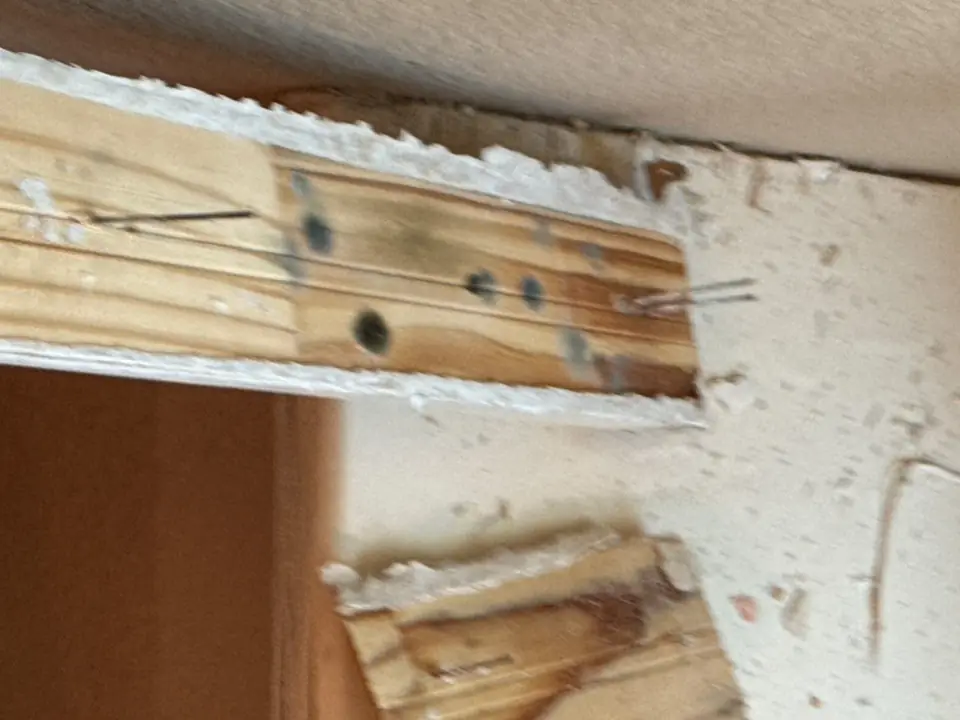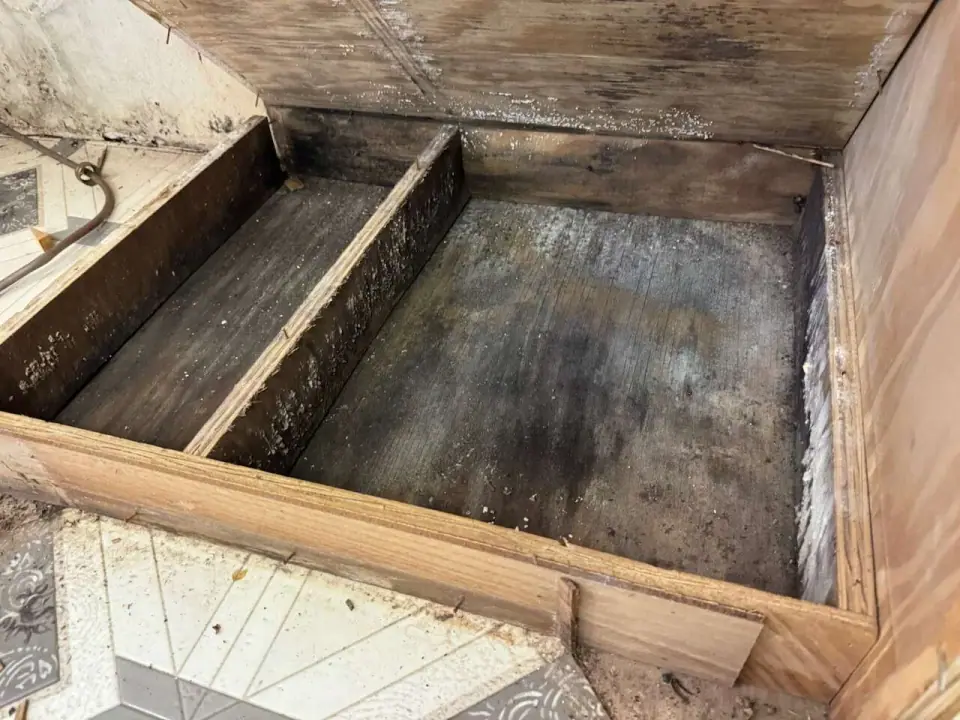
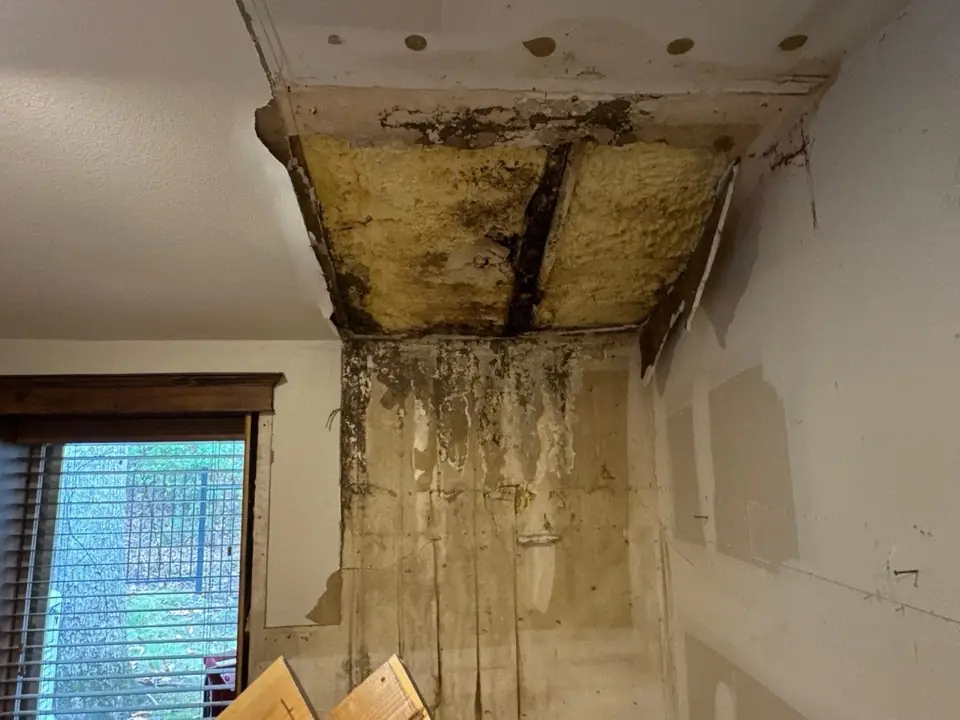
A wall can look perfectly normal from the room side and still have mold growing behind it. Paint and drywall hide a lot. The photos on this page are from a recent Wet To Dry job in East Texas, and almost everything you see in them was out of sight until the ceiling and wall were opened. That is the case for getting your home checked for mold or having the air quality looked at, even when nothing looks wrong.
What Was Behind the Drywall
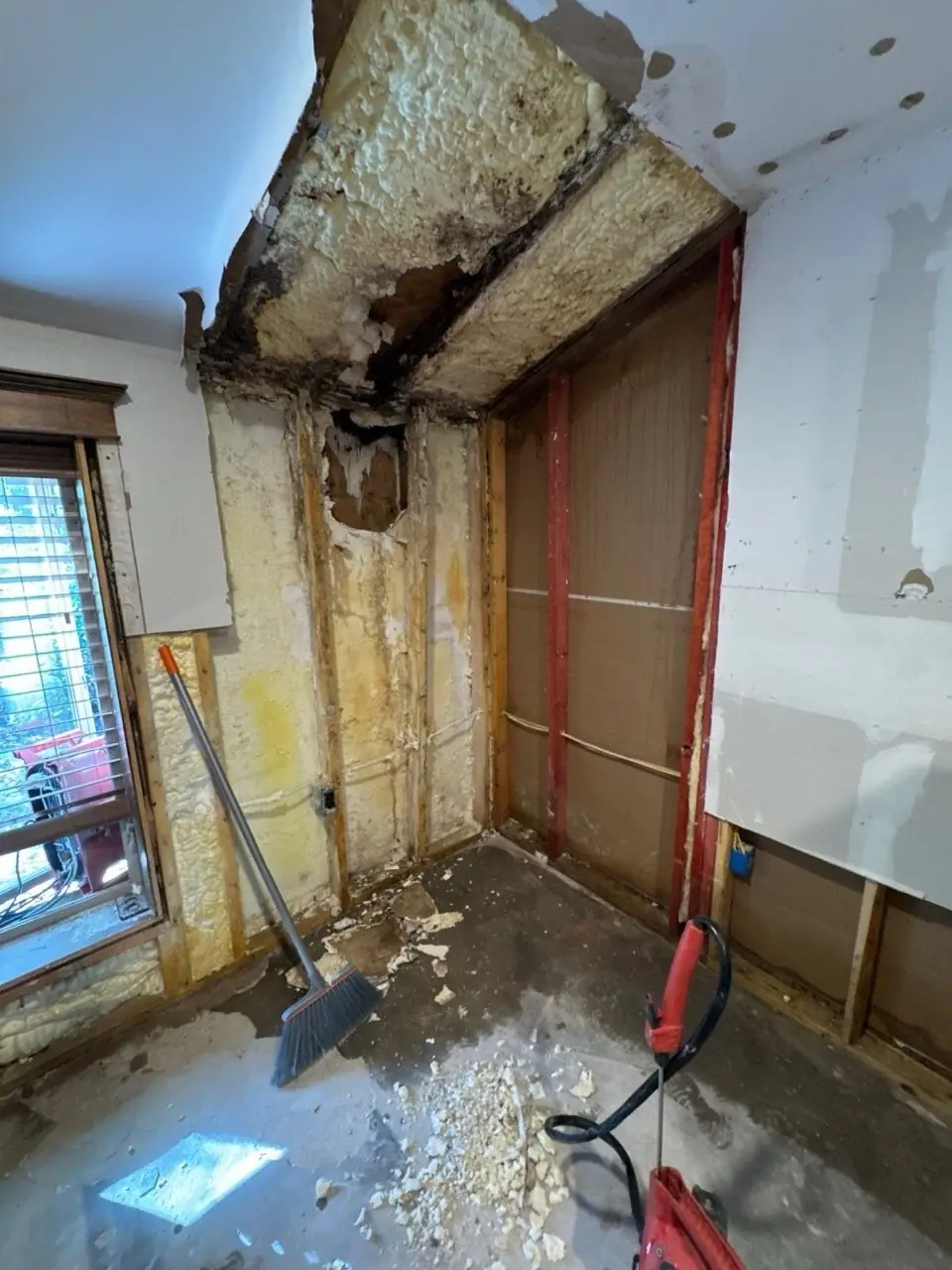
Water got into this ceiling and ran down the inside of the wall. Once the drywall came down, the spray foam insulation above it was stained dark with mold, and the back of the wall showed streaks where water had run down the inside. None of that is something you can see with the drywall in place. The photo at the top of this page is that ceiling.
As the tear-out went further, the wall came down to the studs. Mold was on the foam overhead and on the wall materials, and the wet, damaged pieces had to come out.
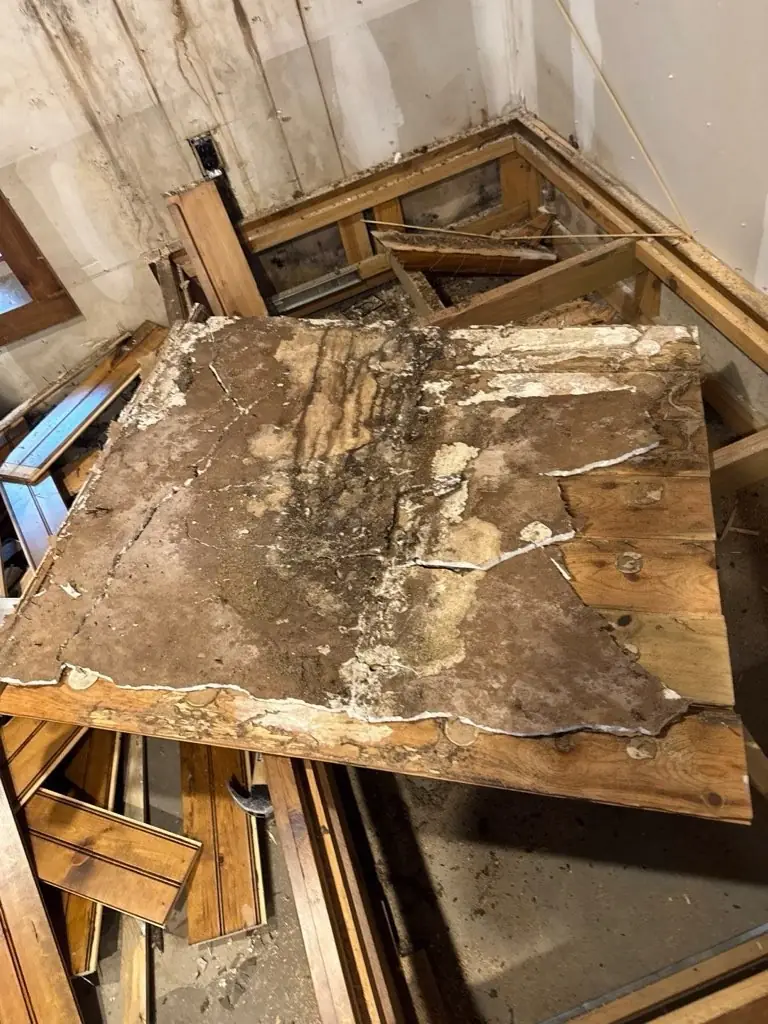
The floor told the same story. When a wood floor panel was lifted and flipped over, its underside was covered in mold and water staining. From the room, it looked like an ordinary floor.
Why Mold Hides So Well
Mold needs three things: moisture, something to feed on and time. The inside of a wall or ceiling has all three. Drywall paper, wood framing, subfloor and dust all feed it, and a slow leak from a roof, a pipe, a window or an appliance can keep a cavity damp for months without a single drip showing in the room. By the time a stain comes through the paint, the growth on the back side is often much bigger than the stain.
That is why a clean-looking wall is not proof of a dry wall. The only way to know is to measure moisture, look where the water goes, and in the right cases test the air or surfaces.
Signs It Is Worth Getting Checked
- A musty or earthy smell, especially when the AC or heat kicks on
- A past roof leak, plumbing leak, appliance leak or flood, even one that was "dried out"
- Peeling paint, bubbling, soft spots or warped trim, flooring or baseboards
- Allergy-like symptoms that ease when you leave the house
- Buying or selling a home, or moving into one that sat closed up
None of these proves there is mold. Each one is a reason to look before it gets bigger.
What Mold Testing and an Air Quality Check Tell You
A moisture inspection comes first. With moisture meters and a thermal camera we can find wet materials behind a wall or ceiling without tearing anything open, and map how far the water spread. Wet materials are where mold starts.
Air and surface sampling answers a different question: is mold actually growing indoors, and how much? Air samples taken inside are compared with a sample taken outside the same day. Indoor numbers well above outdoor numbers, or mold types that are not in the outdoor air, point to growth somewhere in the house even when you cannot see it. Surface samples confirm what a suspicious spot is. Testing is also how you prove the job is done: a clearance check after remediation shows the area is back to normal before rebuilding starts.
Wet To Dry inspects, documents moisture readings and coordinates air and surface sampling when it is appropriate, plus that clearance check before the walls go back up.
What Happens If Mold Is Found
The fix always starts with the water. Find the source and stop it, contain the area so spores do not spread, remove the materials that cannot be cleaned, HEPA clean and dry everything that stays, then verify before putting the room back together. On this job that meant opening the ceiling and wall, pulling the wet flooring up to the slab and taking out everything the mold had reached.
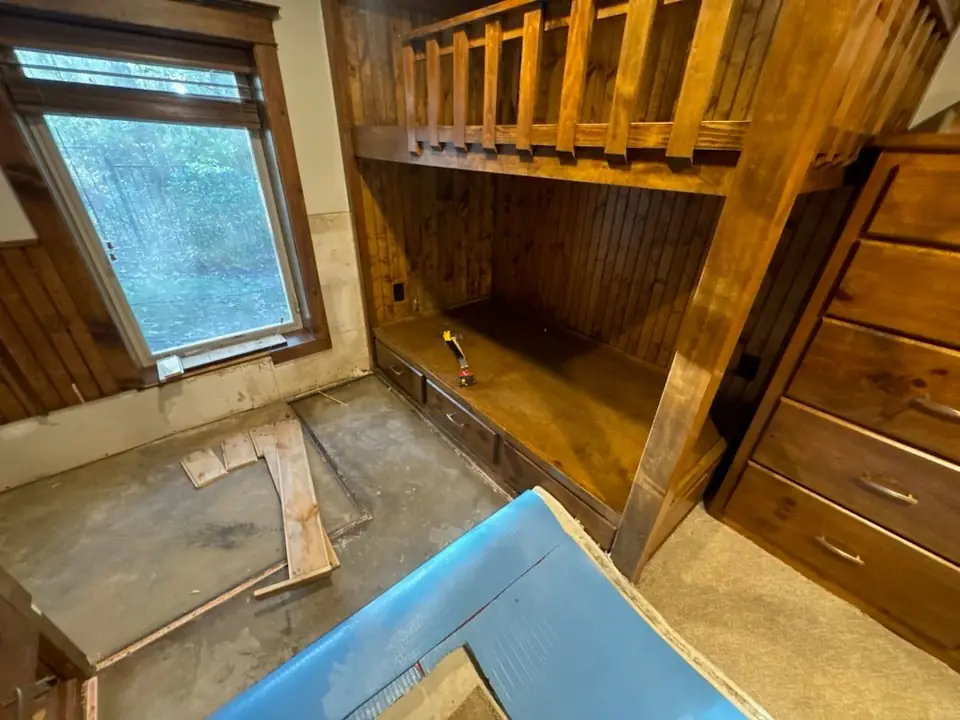
Catching it early keeps that list short. A small wet spot found with a meter is a far smaller job than a wall and ceiling full of mold found years later.
Get Your Home Checked
If you have had a leak, smell something musty or just want to know what is behind your walls, Wet To Dry Restoration in Winnsboro can take a look. Our mold remediation page explains the full process. Call (903) 869-8838 to set up an inspection.